


Adaptronics closes a 3.15 million round: Audit Quality manages the due diligence for the Deep Tech operation

TL;DR:
The Italian Deep Tech sector continues to show signs of vitality in contrast to the general decline in VC investments recorded in 2025. In this scenario, the operation concluded in November by Adaptronics, a spin-off of the University of Bologna, which finalized a capital increase of 3.15 million euros, is part of this. The operation not only injects liquidity into one of the most promising realities of advanced robotics, but confirms the crucial role of a rigorous financial verification in the negotiation phases.
Operations on startups with a high technological content require a specific level of analysis, where the evaluation of intangible assets and the solidity of fundamentals must be certified with precision. It is in this context that the Audit Quality team of Gruppo AQ intervened, supporting the lead investor in the delicate pre-closing verification phases.
Why is EAAL technology changing robotics?
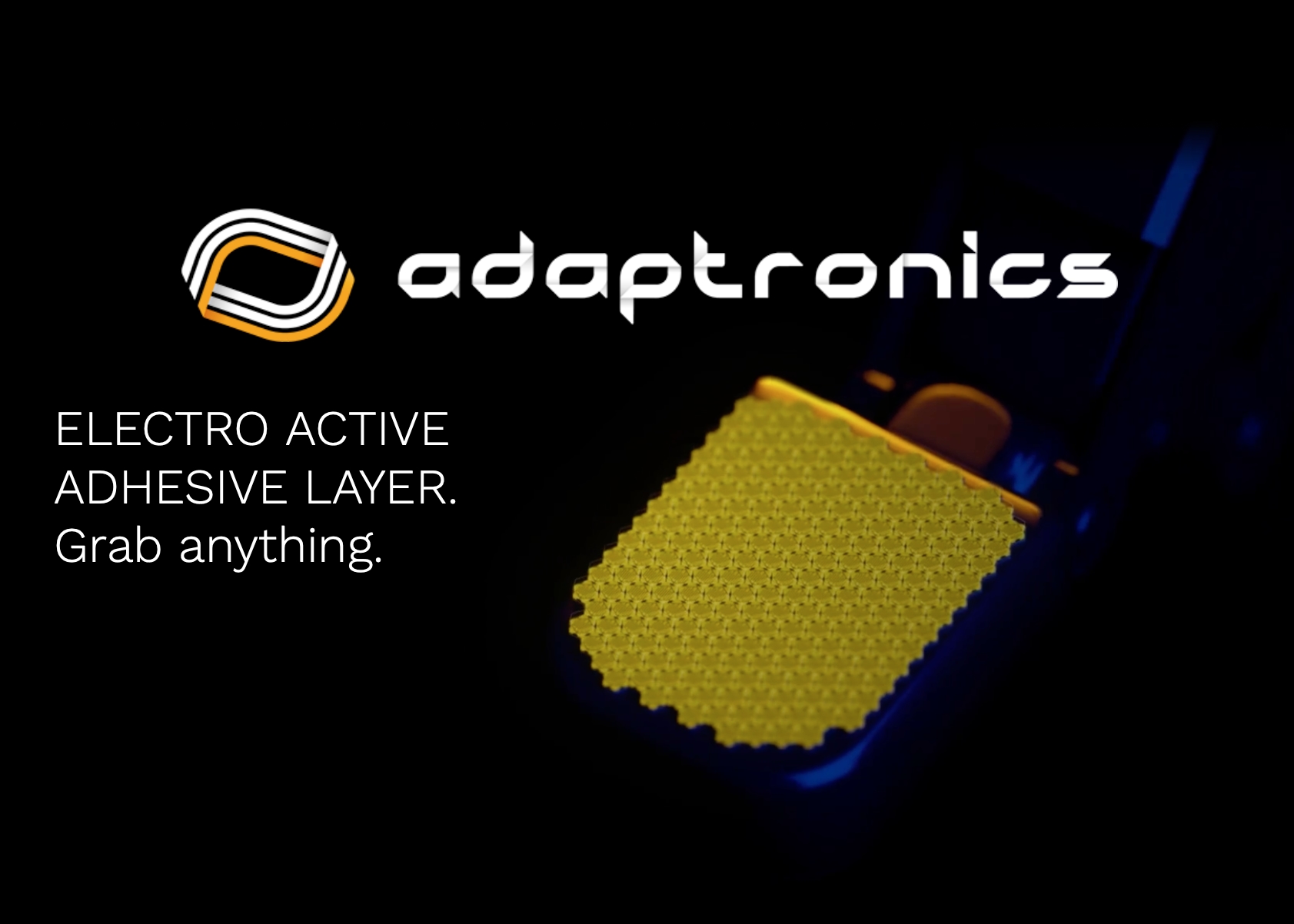
The value at the center of the operation lies in the proprietary technology EAAL (Electro-Active Adhesive Layer). Unlike traditional pneumatic or mechanical systems, which are often bulky and rigid, the solution developed by Adaptronics uses electrostatic forces to generate a controllable adhesive grip.
The industrial advantages are measurable:
- Energy efficiency up to 1,000 times higher than standard grippers.
- Activation and release times under 10 milliseconds.
- Ability to manipulate objects of different shapes and materials, with weights up to several kilograms.
This versatility opens up immediate application scenarios in packaging and logistics, but looks above all at the Space Economy. The ability to operate in a vacuum makes these systems ideal for the removal of orbital debris and the maintenance of satellites, markets where the precision of the grip is the only variable that matters between the success and failure of a mission.
Who are the investors and what vision do they share?
The round was led by 360 Capital, a venture capital fund with a strong vocation for European industrial innovation. Also participating in the investment were Galaxia, the Technology Transfer Hub for Aerospace created on the initiative of CDP Venture Capital, and Obloo Ventures, which had already bet on the company in the pre-seed round of 2023.
The entry of institutional and specialized capital will serve to strengthen production capacity and structure commercial expansion in Italy and Europe. For investors, the challenge is to support Adaptronics’ transition from research excellence to an industrial player capable of scaling. In operations of this magnitude, where technological risk is added to market risk, certainty on starting financial data becomes a strategic asset for those who invest.
What was Gruppo AQ’s operational role?
The complexity of a Deep Tech deal requires technical partners capable of “reading” the numbers beyond the ordinary financial statement. Audit Quality, a Gruppo AQ company, supported 360 Capital by entirely managing the tax and accounting due diligence.
The team led by partner Vincenzo Romano, together with Francesco Brunacci, Luca Derosa and Flavio Staffa, analyzed the target’s financial structure to map risks and latent opportunities. This type of intervention, typical of our Transaction Support services, allows the investor to reach the closing with a transparent information framework, reducing the informational asymmetries typical of the seed and early stage phases. The activity is in continuity with other recent operations followed by Gruppo AQ, such as those for Navest and Tundr, where the speed of execution of the due diligence was decisive for meeting investment timelines.
What prospects for Italian Deep Tech?
The Adaptronics operation is a positive signal for the ecosystem. It demonstrates that when academic research produces defensible patents (such as the EAAL thin-film technology), venture capital responds present. However, the transition from the laboratory to the factory remains critical: startups must quickly equip themselves with solid administrative structures to withstand the impact of growth.
For founders Lorenzo Agostini, Camilla Conti and Rocco Vertechy, the challenge now shifts to industrial execution. For investors and for partners like Gruppo AQ who support them, the goal remains to build financial and governance infrastructures capable of sustaining this acceleration smoothly.
In short
Related articles
Did you know that
FAQ
<!– wp:wpseopress/faq-block {"faqs":[{"question":"What is Adaptronics’ EAAL technology?“,”answer”:”It is a proprietary technology that exploits electrostatic forces to adhere to and manipulate objects of any material, reducing consumption and overall dimensions compared to mechanical grippers.”,”image”:””},{“question”:”What was the role of Gruppo AQ in the operation?“,”answer”:”Through the company Audit Quality, Gruppo AQ carried out the tax and accounting due diligence on behalf of the 360 Capital fund, verifying the correctness of the financial data before the investment.”,”image”:””},{“question”:”Who are the investors in the 3.15 million round?“,”answer”:”The round was led by 360 Capital, with the participation of the Galaxia Hub (CDP Venture Capital and Obloo Ventures) and the reinvestment of Obloo Ventures.”,”image”:””},{“question”:”In which sectors will the technology be applied?“,”answer”:”The main sectors are industrial automation (packaging, logistics) and aerospace, in particular for the maintenance of satellites in orbit.”,”image”:””},{“question”:”Why is a due diligence necessary for a startup?“,”answer”:”It serves to protect the investor by verifying that there are no hidden liabilities, tax risks or accounting irregularities that could compromise the future value of the company.”,”image”:””},{“question”:”What is meant by Deep Tech?“,”answer”:”It refers to startups based on tangible scientific discoveries or significant engineering innovations, which require long development times and substantial initial capital.”,”image”:””}],”listStyle”:”ol”,”titleWrapper”:”div”} /–>-

ISAAC closes a 14 million euro Series B round
Audit Quality closes the tax and accounting due diligence for the strategic operation related to ISAAC, supporting the 360 Capital fund in the 14 million euro Series B round. -
Investor Visa Italy: how to invest €250,000 in an innovative startup and get a residence permit
Complete guide to Investor Visa Italy with €250,000 investment in an innovative startup: requirements, procedure, timing, anti-money laundering documentary obligations and updated 2026 tax benefits. Gruppo AQ support for compliant operations. -

Electronic meal vouchers 2026: exempt threshold rises to 10 euros
The 2026 Budget Law raises the exempt threshold for electronic meal vouchers from 8 to 10 euros. Impact on welfare and corporate cost: it is necessary to update policies and payroll and evaluate whether to standardize tickets to electronic ones to simplify management. -
Hyper-depreciation 2026: up to 180% for Industry 4.0
From 2026 hyper-depreciation returns for 4.0 investments: 180% increase up to 2.5 million, then 100% up to 10 million and 50% up to 20 million. Investments 1/1/2026–30/9/2028. Technical requirements, EU/EEA production and documentary file are decisive.