

Creditworthiness: why the business plan has become the decisive factor

The rules of engagement between banks and businesses have changed drastically in recent years. As recently reported by Il Sole 24 Ore, “banks are raising the bar” when it comes to evaluating the creditworthiness of companies. It is no longer enough to present yourself with tidy financial statements and a good payment history: today the focus has shifted to planning capacity and the strength of future strategies.
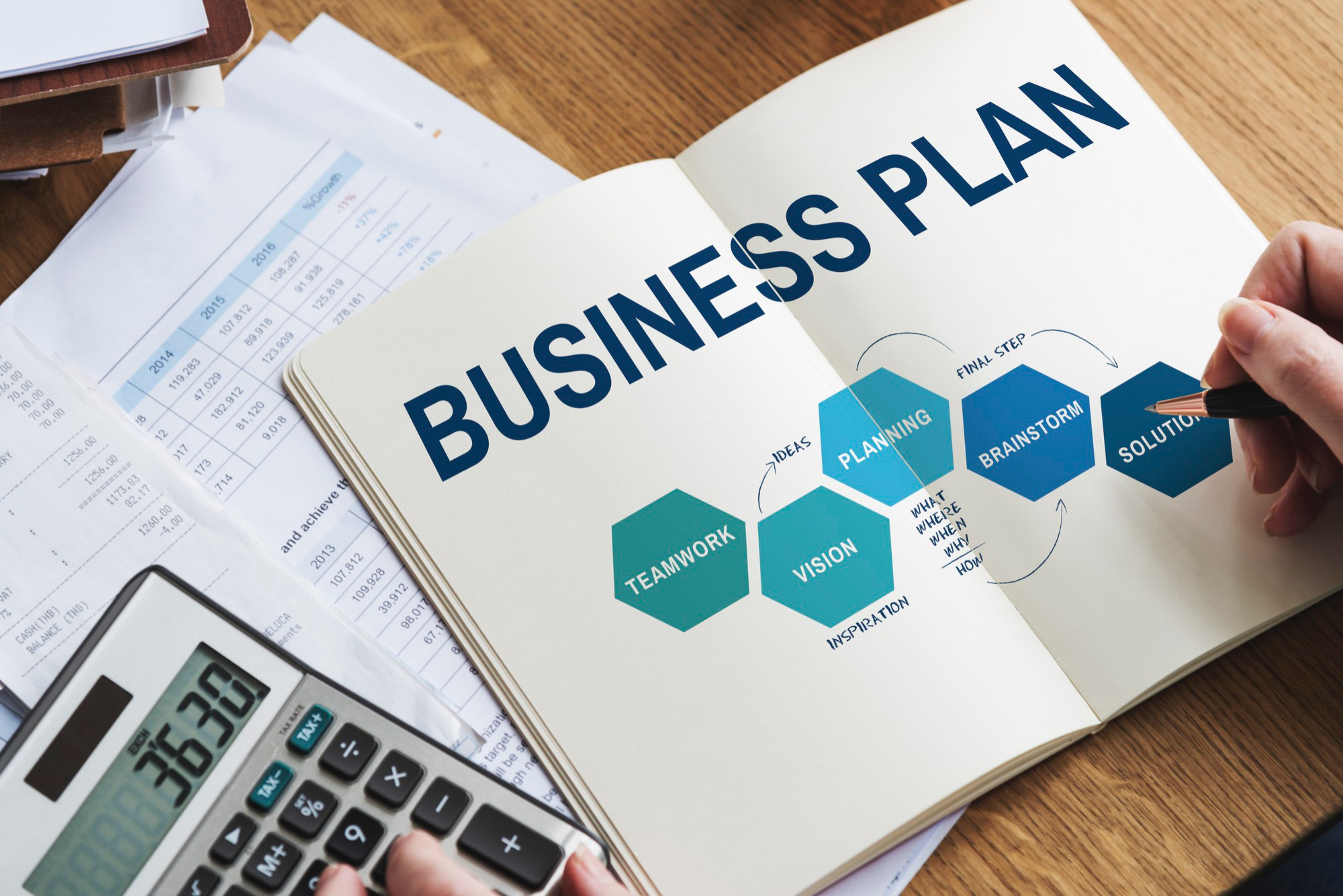
In this new scenario, the business plan has taken on a central and decisive role. From a simple accessory document it has become the main tool through which credit institutions evaluate not only where the company is today, but above all where it is going and how it intends to get there. A paradigm shift that requires entrepreneurs and managers to acquire new skills and to face the dialogue with the financial world with greater awareness.
The business plan is not just a document, but a strategic compass
In the past, access to credit was predominantly based on the historical analysis of a company’s financial data. Solid financial statements and a history of profitability were the main guarantees requested by credit institutions. Today, this paradigm has radically changed. As also highlighted by recent analyses by “Il Sole 24 Ore”, banks and investors have “raised the bar”, placing the business plan at the center of the process of assessing creditworthiness. This document has stopped being a mere formality to become the strategic representation of the entrepreneurial vision. It no longer matters only where you come from, but above all where you are going and with what plan. A well-structured business plan is not limited to projecting numbers, but tells a coherent and credible story, which demonstrates the sustainability of the business model, the understanding of the market and the ability of management to navigate future challenges. It is proof that behind the numbers there is a solid strategy, a clear vision and a detailed action plan. For this reason, its drafting requires a meticulous and professional approach, going beyond the simple compilation of standard sections.
What do banks look for in a business plan?
When a credit institution or an investor analyzes a business plan, they do not just look for optimistic financial projections, but for a series of elements that, as a whole, paint a picture of reliability and potential. First of all, the clarity of the strategic vision is fundamental: where does the company want to get in the next 3-5 years? What are its measurable goals? Equally important is the analysis of the target market: who are the competitors? What is the company’s competitive advantage? Another crucial aspect is the sustainability of the business model: how does the company generate value and what are its revenue streams? The financial projections, obviously, remain a pillar of the evaluation. They must be realistic, consistent with the strategy and based on verifiable assumptions. Finally, the management team plays a decisive role: its experience, competence and cohesion are considered a fundamental guarantee for the success of the project. A business plan that responds comprehensively and convincingly to these questions is much more likely to obtain the trust of financial interlocutors. For businesses, this means not only greater chances of access to credit, but also the opportunity to have an internal tool for strategic guidance and control.
The challenge for startups: demonstrating potential without a track record
For startups and new businesses, drafting a business plan represents an even more complex challenge. The absence of a consolidated financial history – the so-called “historical data” – shifts the entire weight of the assessment to the ability to demonstrate the future potential of the project. In this scenario, the business plan becomes the only tool available to convince banks and investors of the validity of the business idea. The greatest difficulty lies in the need to build credible financial projections starting from scratch, based on in-depth market research, competitor analysis and well-argued growth hypotheses. This is where the assistance of a strategic partner like Gruppo AQ can make the difference. Thanks to a multidisciplinary approach, which integrates tax, financial and strategic skills, we are able to support startups at every stage, from defining the business model to drafting a solid and convincing business plan. Our team of experts helps to structure projections, validate assumptions and present the project professionally, maximizing the chances of success in the search for funding and investors. We support the entrepreneur in transforming a vision into a concrete action plan, ready to face the market.
Conclusions: Transform your business plan into a competitive advantage with the right support
In an economic context where access to credit is increasingly selective, a well-made business plan is no longer an option, but a necessity. It is the business card with which a company presents itself to banks and investors, and its quality can determine the success or failure of an initiative. As we have seen, its importance is even greater for startups and new businesses, which must rely entirely on the goodness of their plan to demonstrate their value.
Drafting an effective business plan requires transversal skills, spanning from strategy to finance, from marketing to market analysis. Relying on expert professionals, capable of guiding the entrepreneur in this process, is not a cost, but a strategic investment. Gruppo AQ, with its consolidated experience in supporting businesses and startups, offers an integrated consulting service for drafting business plans that not only open the doors of credit, but also become a powerful tool for business management and growth. Contact us to discover how we can transform your project into a success.
Did you know that…?
- Since September 22, 2025, according to Il Sole 24 Ore, banks have “raised the bar” in creditworthiness assessment: it is no longer enough to present historical financial statements, today the capacity for future strategic planning is decisive. (Source: https://ntplusfisco.ilsole24ore.com/art/valutazione-merito-credito-decisive-strategie-business-plan-AHwzMcgC)
- The business plan has gone from an accessory document to a central evaluation tool: banks want to see where the company is going and how it intends to get there, not just where it comes from. (Source: Il Sole 24 Ore, September 22, 2025)
- From July 1, 2025, all Italian banks require a business plan from companies that want to renew old credit lines or open new ones, making this document mandatory in practice. (Source: https://www.ilnuovocommercialista.it/dal-1-luglio-le-banche-chiedono-il-business-plan-per-gli-affidamenti/)
- For startups and new businesses without a financial record, the business plan becomes the only tool available to convince banks and investors: future projections completely replace historical data. (Source: https://www.counselsrl.it/2025/10/10/bancabilita-delle-imprese/)
- The DSCR (Debt Service Coverage Ratio) has become one of the key indicators that banks use to assess debt sustainability and the company’s ability to meet future financial commitments. (Source: https://www.athenaassociati.it/it/news/merito-di-credito-una-valutazione-sempre-piu-strategica)
FAQ
- How long should a business plan be? There is no predefined length, but generally a good business plan is between 20 and 40 pages, excluding attachments. The important thing is that it is clear, concise and complete.
- Do I necessarily have to turn to a consultant to write a business plan? It is not mandatory, but it is strongly recommended, especially if you have no experience in the matter. Un consultant can help avoid common mistakes and present the project in the most effective way.
- What happens if the financial projections of my business plan turn out to be wrong? It is normal for there to be some discrepancy between projections and real results. The important thing is to show that reasonable assumptions have been made and that you are able to adapt the strategy as you go along.
- Can I use a business plan template found online? Templates can be a good starting point, but it is essential to customize them according to the specificities of your project. A “copy and paste” business plan is easily recognized and discarded.
- What is the difference between a business plan and a pitch deck? The business plan is an analytical and detailed document, while the pitch deck is a synthetic and visual presentation, used to capture the attention of investors in a first stage.
- How often should I update my business plan? Ideally, the business plan should be reviewed at least once a year, or whenever significant changes in strategy, market or corporate structure occur.
Sources
-

ISAAC closes a 14 million euro Series B round
Audit Quality closes the tax and accounting due diligence for the strategic operation related to ISAAC, supporting the 360 Capital fund in the 14 million euro Series B round. -
Investor Visa Italy: how to invest €250,000 in an innovative startup and get a residence permit
Complete guide to Investor Visa Italy with €250,000 investment in an innovative startup: requirements, procedure, timing, anti-money laundering documentary obligations and updated 2026 tax benefits. Gruppo AQ support for compliant operations. -

Electronic meal vouchers 2026: exempt threshold rises to 10 euros
The 2026 Budget Law raises the exempt threshold for electronic meal vouchers from 8 to 10 euros. Impact on welfare and corporate cost: it is necessary to update policies and payroll and evaluate whether to standardize tickets to electronic ones to simplify management. -
Hyper-depreciation 2026: up to 180% for Industry 4.0
From 2026 hyper-depreciation returns for 4.0 investments: 180% increase up to 2.5 million, then 100% up to 10 million and 50% up to 20 million. Investments 1/1/2026–30/9/2028. Technical requirements, EU/EEA production and documentary file are decisive.